
Real Automation Training Solutions Using Interactive Simulation
With the rapid growth of industrial manufacturing, there needs to be a solution for training the next generation. Today I will share how automation teams can use interactive simulations to build real troubleshooting capability, not just complete training.
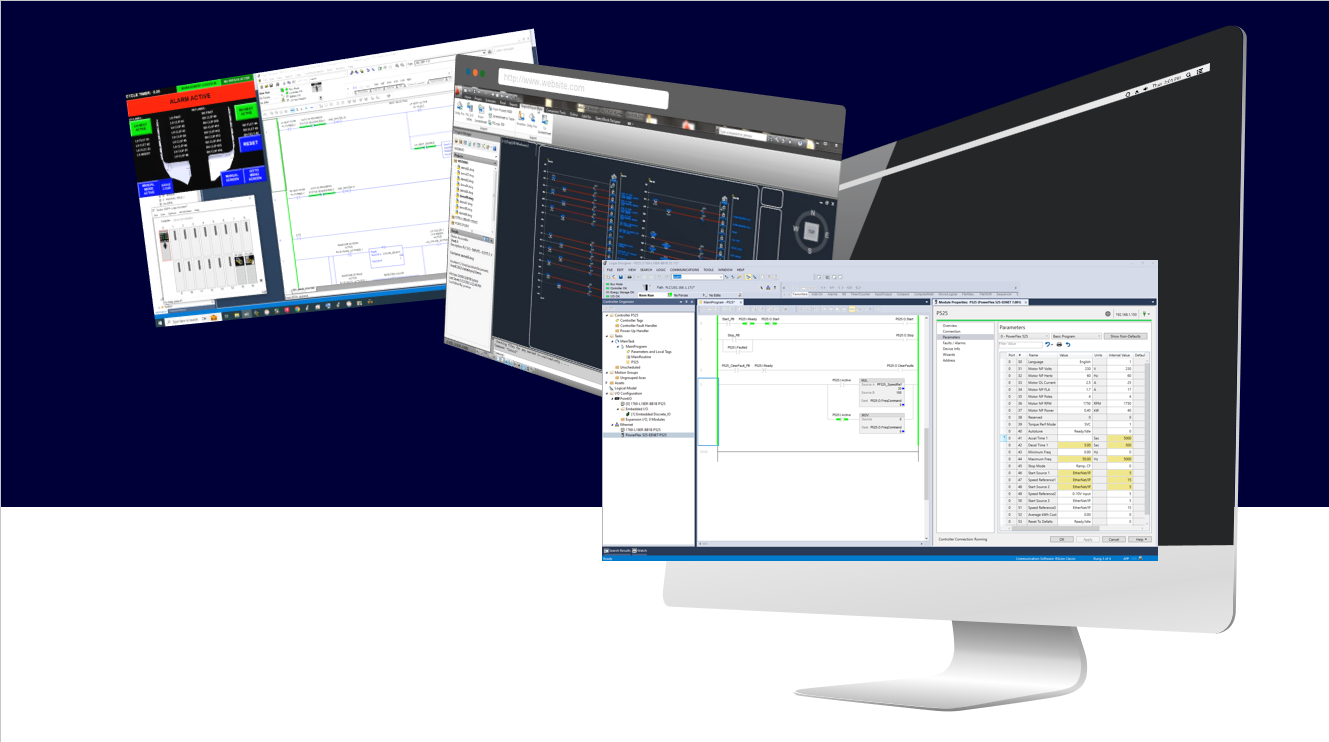
The Next Generation of Automaiton Training Solutions
Most automation teams don’t have a knowledge problem.
They have a performance problem.
They know the components.
They’ve seen the systems.
But when something goes down…
That’s where the gap shows up.
I’ve been thinking a lot about how we actually develop engineers and technicians in this space.
Not courses.
Not videos.
Not shadowing someone for 6 months.
Real hands-on decision making.
That’s where Interactive Simulation Training (IST) fits.
Here’s how I see it being used across real teams:
1. Tech Drills (Skill Conditioning)
Short, repeatable exercises.
Trace an input.
Find a fault.
Navigate logic.
Not to “learn”…
but to build instinct.
2. Device-Level Training (System Familiarization)
Not just “this is a sensor” or “this is a drive”
But:
How it behaves in a system
How it fails
How it impacts everything around it
3. Troubleshooting (Decision Training)
This is the big one.
Intermittent faults
Conflicting signals
Misleading symptoms
You’re not memorizing steps.
You’re learning how to think.
4. Scenario-Based Learning (Real-World Simulation)
Full system situations:
Conveyors
I/O
Networks
Logic
You step into a problem that looks like the real world…
because it is.
5. Certifications (Performance Validation)
Not “they completed the course”
But:
Can they solve the problem?
How fast?
What path did they take?
Now you’re measuring capability, not attendance.
The real shift is this:
We shouldn’t be asking
“Did they take the training?”
We should be asking:
Can they perform when it matters?
That’s the gap I’m focused on solving.
No hardware
No software installs
No travel
Just real systems, real problems, and real decision making
accessible from anywhere
Curious how others are handling this today.
How are you developing real troubleshooting capability on your teams?
Follow Us
Recent Posts